
Part II focuses on convenios between two PRWL teams—Arecibo Wolves and Caguas Criollos —and four Cuban Winter League teams (Almendares Scorpions, Cienfuegos Elephants, Havana Lions, Marianao Tigers), as well as big-league clubs. Part III includes convenios between big-league clubs and Ponce Lions-Mayagüez Indios, and Nicaragua/Panamá Winter Leagues.
Cuba’s Winter League
Brooklyn sent RHP Joe Black (15-6, 2.42 ERA), SS Don Zimmer, and 2B Jack Cassini to 1951-52 Cienfuegos. Dodgers’ coach Billy Herman managed them. In 1954-55, the St. Louis Cardinals (SLC) sent Don Blasingame, Ken Boyer, Dick Schofield, and Bill Virdon to the 36-33 Havana Lions. Virdon enjoyed playing in Havana’s Gran Stadium. «There were no road trips,» recalled Virdon. «It was a chance to improve.» He posted a .340 BA with 6 HR and 54 RBI.
The SLC (1955-56) sent other prospects to the Lions: Wilmer «Vinagre» Mizell (12-9, 206 SO, 2.16 ERA) and Jackie Brandt (.313, 7 HR, 35 RBI). Brandt enjoyed Havana’s atmosphere, including casinos and racetracks. Mizell’s 206 SO are second to Satchel Paige’s 208 for 1939-40 Guayama in PR—all-time Caribbean Winter League standard. Adolfo Luque—who pitched for Cincinnati in the 1919 World Series and New York Giants in the 1933 Fall Classic—managed Havana, 1954-56. He taught 1953-54 Marianao rookie Camilo Pascual how to throw a good curveball. Pascual was traded to Cienfuegos for 12 baseball bats pre-1954-55 winter season.
Jim Bunning pitched for the 1956-57 Marianao, 1957 Caribbean Series (CS) champs in Havana, but Detroit lacked a convenio with Marianao Tigers. Connie Marrero helped Bunning perfect his slider in Cuba. Brooks Robinson played 2B for 1957-58 Cienfuegos and tied for the league lead with 9 HR, but no agreement existed between Baltimore and Cienfuegos, the undefeated 1960 CS winners managed by Tony Castaño.
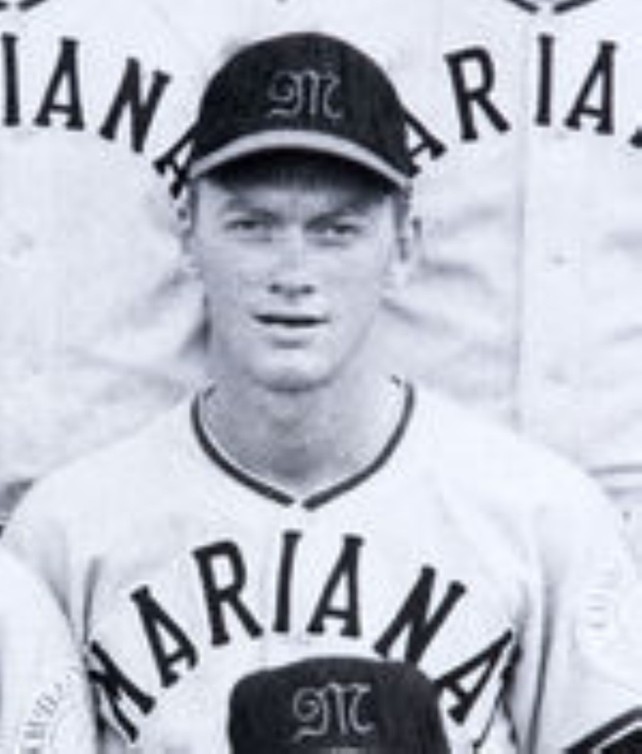
Jim Bunning, 1956-57 Marianao Tigers ace, was 2-0, 0.61 ERA, 1957 CS. Photo from the personal collection of Inocente Álvarez.
Almendares Scorpions recruited imports from various organizations. Their 46-26 team in 1958-59 had a rotation of Art Fowler (9-6) and Tom Lasorda (8-3), plus natives Orlando Peña (15-5) and Mike Cuéllar (5-7). Catcher Dick Brown (Orioles), 1B Rocky Nelson (Pirates), and OF Bob Allison (Washington Senators) reinforced them. Tony Taylor (.303 BA), a Chicago Cubs player, won the batting crown. A decade later, he played for the PRWL San Juan (SJ) Senators, winning a 1967-68 batting title: .3418 to José Pagán’s .3417. «PR was a second home,» said Taylor. «When we played [archrival] Santurce, it was like Cuba’s Havana-Almendares rivalry.»
Arecibo Wolves Convenios
Luis R. Olmo, Arecibo’s first [1961-62] manager, coordinated a Wolves-Milwaukee Braves convenio. Tommie Aaron, Phil Niekro, Moe Drabowsky, Ed Charles, Mack Jones, Claude Raymond, and future celebrity Bob Uecker were in the Braves’ system. Uecker enjoyed playing for Olmo, who spoke flawless English. Raymond received a $100 bill from a fan after winning the tie-breaker for fourth place versus SJ, and won the PRWL All-Star Game. Niekro experimented with his knuckler in PR. The confidence factor was important, too. «In winter ball, you don’t have as much to lose,» Raymond said. «When you retire a Clemente or Cepeda on a slider [you say.] ‘I’m going to use that in the big leagues,’ if you can get these hitters out.» Drabowsky lived in a house next to Bob Uecker and was enticed by Peace Corps workers in Arecibo to climb trees using stout ropes. Drabowsky: «That messed up my shoulder, but other than that, PR was a good experience.»
Cookie Rojas, a Wolves’ import, helped form an «informal convenio» whereby some Philadelphia Phillies joined Arecibo, 1962-64, e.g., Dennis Bennett, John Boozer, and John Herrnstein. Minnesota Twins prospect Tony Oliva claimed the 1963-64 batting title, with teammate Arturo López (.337), fourth, behind Ponce’s Walter Bond (.349) and SJ’s Roberto Clemente (.345). In the late 1960s, the A’s sent Sal Bando, Paul Lindblad, and others to Arecibo. Bando’s .330 BA placed him third (behind Tony Taylor and José Pagán), ahead of Johnny Bench (.323) and Tony González (.321) of SJ.
The KC Royals’ 1970s convenios with Arecibo resulted in Jack McKeon managing them in 1971-72, after replacing Tony Castaño at season’s end, and in 1972-73, when they made the playoffs, and 1977-78. His outgoing personality captivated the fans. McKeon: «I had a good rapport with the fans and the PR players. They remember me as a manager who always gave the kids—Candy Maldonado, Carlos Lezcano, Mario Ramírez—a chance to play. I was trying to get these kids enough playing time so we could build up experience and not have to worry about imported players. It was time to build some tradition/depth of Arecibo’s native players.»
Arecibo, founded in 1616, has 127 square miles as PR’s largest of 78 municipalities. It took its name from Indian Chieftain Arasibo. Gene Tenace, 1972 Oakland World Series hero (four HR), considered Arecibo his favorite place to play winter ball. He liked Mexico, Venezuela, and the DR, but a key reason he liked Arecibo was his Arecibo/Oakland teammate Angel Manual, who treated him to seafood meals and showed him around the Island.
Dennis Leonard was out of 1973 Class-A ball when Arecibo GM Carlos Pieve signed him. To insert a 22-year-old Class-A pitcher into Arecibo’s starting rotation was pure folly to PRWL fans and officials. But Pieve recalled a Class-A player named Hank Aaron, who starred for Caguas two decades earlier and stuck to his guns. «Pieve had lived in Brooklyn, and I was born there, so we had something in common already,» per Leonard. «He was really supportive, and I got off to a good start. Leonard returned to the States for the birth of his first child, but returned to help Arecibo make the playoffs. He shared a house on the ocean with KC prospects Gary Lance, Mark Littell, and Tom Poquette.
Lance noted: «We shared a house, and a car, too. It was a broken-down Volkswagen. In fact, the driver’s back door wouldn’t open; you would have to crawl through the driver’s side. Littell used it most of the time. He got up before everyone else and took the car. We didn’t see him until early afternoon.» The long bus trips to Ponce included overnight stays at the Hotel Melia. In 1982-83, Lance drove to games in his rental car on better roads, without staying in hotels. Wolves’ pitcher Hal Baird—who later coached the Auburn University baseball team—noted that the PRWL was very competitive with top-notch prospects then, including Gary Carter and Mike Schmidt with Caguas, Ponce’s Phil Garner, and a host of other fine imports.
When Arecibo (5-1 W-L) won the February 1983 CS in Caracas, the working vacation for Kevin Hagen, Rich Bordi, Keith Creel, and Lance became a party. Arecibo officials rewarded players with a cruise to SJ rather than a 500-mile flight from Caracas. Stops were made at Aruba and the DR. «Coming into the port of SJ was incredible—everybody had streamers,» Hagen said. «Everyone was so excited—like we won the World Series. We visited the governor’s mansion, and roads from SJ to Arecibo were lined two, three deep with people on our parade route.» For Lance, who had a 1977 cup of coffee with the Royals, it was his biggest thrill in baseball. «I had a no-hitter in AA and was later called up to the majors. But [this] was a Disneyland-type thing.»
Pat Kelly—most successful skipper in Arecibo history—led the Wolves (27-22) to the 1995-96 PRWL crown. He counted on catcher Mike Matheny (SLC), KC Royals prospect Allen McDill, a lefty reliever, but mostly natives—Bernie Williams (NYY), Oreste Marrero, Ricky Otero, and closer José Alberro. Convenios were mostly non-existent. «The basic thing here, in comparison to Stateside minor leagues, is that you manage every game to win. It’s a great experience for me. I play every game to win, and don’t have to say, ‘Well, I’ll take this guy out because he’s a prospect.'» Kelly has won nearly 2,100 minor-league games as a manager, excluding «partial seasons,» placing him in the Top 15 all-time in minor-league history.
Caguas Criollos
Luis Olmo’s scouting for the Boston/Milwaukee Braves, combined with his friendship with Braves owner Lou Perini, facilitated the big-league club sending prospects to the Criollos. Bert Thiel, 14-7, 2.50 ERA, in 176.1 innings for 1951-52 Caguas, was a 1951 minor-league teammate of Olmo with Class-AAA Milwaukee Brewers, winners, 1951 Junior World Series over Montreal Royals. Thiel and four other Brewers teammates reinforced Caguas. Olmo allowed Thiel and two teammates to drive to Mayagüez and Ponce away games in a used Cadillac. «Luis just wanted to make sure we got to the games on time,» said Thiel. «We respected and liked Luis, a great guy.» Thiel received cases of Don Q rum for his pitching, but left them behind at season’s end.
Hank Aaron transitioned from second base to RF during an early-season 1953-54 hitting slump for Caguas. The 19-year-old benefited from player-manager Mickey Owen’s wisdom. «I knew where I could get a better second baseman than Aaron, [but] he could sure hit,» noted Owen. «One day, I hit him a few flyballs, and he went to it and got them easily, and he threw well. I said, «You’re not an infielder, you’re an outfielder.» Owen secured Charley Neal, who played for the 1953 Piedmont League’s Newport News when Mickey managed Norfolk to the title. «I never told Aaron how to do anything except once I told him to hit one to right field, and he hit a bullet there. Aaron said I helped him hit to the right, but all I really did was urge him to hit the ball there.» Aaron’s .322 BA was third-best behind Mayagüez’s Canena Márquez’s .333 and Ponce’s Harmon’s .325.
Milwaukee sent pitchers Bob Buhl (14 Caguas wins) and Ray Crone (6-1 with Caguas). Their 20 combined wins helped Caguas post a 46-34 record. Milwaukee prohibited them and Aaron from playing in the February 18-23, 1954 CS at Sixto Escobar Stadium, with spring training looming in Bradenton, Florida. Caguas added pitchers Rubén Gómez (Santurce), Luis Arroyo, and Jack Sanford (Ponce), plus Mayagüez’s Corky Valentine for the CS, won by Caguas. Crone—who joined Caguas in December 1953—said there was a certain chemistry between him and Owen, and Owen brought out his best.» Owen’s greatest PR satisfaction was developing players, but he knew that his first job was to win.
George Crowe (1950-51), batting champion (.375), Wes Covington, pitcher Joey Jay, Tom Lasorda, Sandy Koufax, among others, reinforced Caguas in the 1950s. By the early 1960s, the LA Dodgers sent Frank Howard and hurler Pete Richert to Caguas, whose coach was Dodgers’ Caribbean scout Ramón «Monchile» Concepción. Richert noted, «It was fun. José [Pagán] and Félix [Mantilla] found a way to take care of us. After a game, four or five of us would drive 30 miles to SJ for a show/something to eat.» Howard opined: Every young [Stateside] player should play two to three years of winter league baseball to refine their skills. The PRWL kept me in the big leagues and toughened me up. It was better than AAA.» Catcher-utility player Woody Huykes stated: «Caguas management found furnished homes for imports, and their wives would select kitchen supplies at Caguas’s ballpark and take them to their home by taxi. The way imports adapted to PR’s lifestyle was a plus, per Huyke.
Cleon Jones, a prominent NY Mets prospect, played for Caguas in the mid-to-late 1960s, helping them win a 1967-68 PRWL crown. Ron Swoboda reinforced the 1966-67 Caguas. Reliever Bob Apodaca joined the 1973-74 Criollos league/1974 CS champs. Apodaca’s working vacation paid dividends—he impressed Yogi Berra with 18 scoreless innings the next spring, the turning point of his career. «It was up to the American players who went down there to take it seriously, not just as a vacation,» said Apodaca, who lived in the same building as Caguas teammates Mike Schmidt, Jay Johnstone, Craig Swan, and John Montague—Condado section of SJ.
Johnstone and Schmidt played chess on their way to Hermosillo, Mexico, for the February 1-6, 1974 CS won by the Criollos (4-2 W-L). Montreal Expos prospect Gary Carter caught all six and was voted catcher on this CS All-Star Team. Montreal and Philadelphia sent top prospects to Caguas in 1972 -73: hurler Steve Rogers and catcher Bob Boone. «I fine-tuned my slider pitching to Boone,» recalled Rogers. «That winter was key to my Expos success.»
Jim Bunning, via the Phillies, managed Caguas, 1974-76, with 43-27 and 35-25 first-place finishes but final series losses to Bayamón. «Winter ball was fun,» said Bunning. «I thoroughly enjoyed my later managing experience in PR and the DR. The CS was exciting.» Jay Johnstone earned MVP laurels in 1974-75: .345 BA, 9 HR, 46 RBI.
Baltimore-Caguas Hook-Up
Between 1976-77 and 1980-82, the Orioles sent Dennis Martínez, Eddie Murray, Cal Ripken Jr., and Mike Boddicker, among others, to Caguas. The 1976-77 Criollos had a team BA of .307, best in PRWL history. Santurce pitcher Paul Hartzell—pitching for skipper Jack McKeon—recalled his early-season win versus Caguas, whose «big-league» line-up (except for Murray, then) included PRWL batting champ Sixto Lezcano (.366), José «Cheo» Cruz (.338), Julio C. González (.337), Félix Millán (.322), Tony Scott (.322) plus DH José M. Morales, coming off his 25 pinch-hit season with Montreal, catcher Dave Skaggs, and Kurt Bevacqua.
In 1980-81, fourth-place Caguas (29-31) peaked late, winning the playoffs. Long-time Baltimore and Pittsburgh pitching coach Ray Miller called Iowan Mike Boddicker, who won two key late-season games and pitched a three-hit SHO in Game 4, the finals versus Mayagüez. «The writers said we [Caguas] only had Dennis Martínez as a quality pitcher,» said Boddicker. «So that motivated me.» Miller noted: «The PRWL was a great tool for managers. «I learned you had to take it on the chin now and then.»
Ripken, two-time Caguas MVP, played all 60 regular-season games, 1981-82, post-AAA summer, and a brief Baltimore stint. His .314 BA, 10 HR, and league-leading 50 RBI for the 37-23 Criollos were impressive. Bayamón’s Dickie Thon (.333), Mayagüez’s Brett Butler (.327), and teammate Héctor Cruz (.324) had higher BA. «Caguas allowed me to get to the big leagues before I was 21, and part of my goal was to reach the big leagues early and be able to play a long, long time, and I don’t think I’d be able to do it without PR.»
Caguas GM José «Ronquito» García, a big-league scout for Baltimore, Montreal, and San Diego, had the confidence of big-league organizations. «Baltimore felt comfortable sending Dennis Martínez to Caguas when I was their GM. They sent Eddie Murray and Cal Ripken here because of my efforts. Ripken always treated me the same way—with respect—and is thankful to our league for what it did for him. When I scouted for Montreal, the Expos sent Gary Carter, Steve Rogers, and other prospects to Caguas.»
Yankees and Red Sox Prospects
Don Mattingly reinforced the 1983-84 Caguas when the NYY wanted him to become a full-time first baseman. Caguas skipper Vic Power, a seven-time American League Gold Glove winner (1958-1964), took Mattingly under his wing, working on his fielding, and developed a good rapport with him. Power tried sitting Mattingly against a tough lefty late in the season. «I suggested he take the night off,» said Power. «If Mattingly goes hitless, he falls behind Randy Ready. But Mattingly told me he wanted to play and went three-for-four.» Mattingly (.368) outpaced [Mayagüez’s] Ready’s .361.
Ellis Burks (.291, 7-30) helped 31-23 Caguas win the 1986-87 league finals. The talented Boston Red Sox prospect wasn’t part of a convenio, but the season/playoffs taught him a lot. «It was fun. Everyone would compliment each other and have a positive attitude,» he remarked. «Tim Foli was a very aggressive manager. Ramón Avilés and Jerry Morales were coaches who helped a lot. So did [GM] Félix Millán. I opted to go home and relax after the finals. The CS would have been a good experience.»
Jeff Nelson, Caguas’s 6-8 closer, led the 1991-92 PRWL with six saves. Caguas (19-31) finished last, but the Seattle Mariners prospect derived much benefit from the atmosphere and competition before his big-league career took off. Nelson was a color analyst for the 2026 CS on the MLB Network and spoke highly of winter ball.
Thanks to Inocente Álvarez, Bob Apodaca, Hal Baird, Mike Boddicker, Jackie Brandt, Jim Bunning, Ellis Burks, Ray Crone, Moe Drabowsky, Ronquito García, Kevin Hagen, Paul Hartzell, Frank Howard, Pat Kelly, Gary Lance, Dennis Leonard, Arturo López, Jack McKeon, Ray Miller, John Montague, Eddie Napoleon, Jeff Nelson, Phil Niekro, Luis R. Olmo, Mickey Owen, Vic Power, Claude Raymond, Pete Richert, Cal Ripken Jr., Steve Rogers, Cookie Rojas, Tony Taylor, Gene Tenace, Bert Thiel, Bob Uecker, and Bill Virdon. Jorge Colón Delgado did the editing and photo placements.
