
Some 1950s-1990s Winter Ball-Major League Convenios—Working Agreements (Part III)
Part III focuses on convenios between two PRWL teams—Ponce Lions-Mayagüez Indios—and big-league clubs, as well as the Nicaragua-Panamá Winter Leagues. Part IV concludes with Ponce: 1966-67 to the mid-1990s.
Nicaragua/Panamá
Manager Wayne Blackburn shocked the Caribbean baseball world. His Carta Vieja Yankees (5-2 W-L) won the Caribbean Series, February 21-27, 1950, at Sixto Escobar Stadium. They triumphed over the Caguas Criollos, Almendares Scorpions, and Magallanes Navigators. Veteran Chet Brewer won the tie-breaker, 9-3, as Caguas’s Dan Bankhead took the loss. In 1937, Brewer pitched with Águilas Cibaeñas (AC) of the Dominican Republic (DR) and faced Ciudad Trujillo’s Satchel Paige in Game 7 of the finals. President Trujillo’s soldiers stood at attention along the RF line, with the opposing soldiers along the LF line. Brewer also pitched for Mayagüez in 1940-41 and Caguas in 1947-48 in the PRWL. “The most important thing is that we won,” said Forrest “Spook” Jacobs, Carta Vieja second baseman. “That CS was a steppingstone for me. Teams from Cuba and PR later contacted me. I played six winters in Cuba and part of one in PR.”
Ferguson Jenkins (1962-64 León Lions) and Jim Kaat (1959-60 Boer Indians) are the only Cooperstown inductees who pitched in Nicaragua’s Winter League (NIWL). Johnny Pesky managed Kaat. Shortstop Bert Campaneris played for Nicaragua’s 1963-64 Oriental Sharks when many KC A’s played winter ball. For example, Diego Seguí, José Tartabull, Orlando Peña, and Aurelio Monteagudo played with Santurce. José “Palillo” Santiago played with SJ. Doug Rader played in Nicaragua during the 1966-67 season. After that, a Civil War eliminated pro winter ball until 2004-05. Tony Bartirome and Eddie Napoleon, then in the Pittsburgh Pirates’ organization, played in Panamá’s Winter League. Pirates’ scout Howie Haak—known as “King of the Caribbean”—helped Pittsburgh establish Winter League convenios.
Eddie Napoleon played for a combined Panamá-Nicaragua team in a nine-game Interamerican series, February 6-14, 1962, facing Santurce, Caracas, and Mayagüez at SJ’s Sixto Escobar Stadium. Alongside him was Cuban Diego Seguí. Charley Lau, catching for Mayagüez, was an All-Star with a .394 average (13-for-33). Napoleon later recalled, “We [1-8] were the weakest team.” Host Panamá performed more competitively in the February 1960 Caribbean Series (CS), winning three of six games in a four-team field.
Arturo López Recruitment by Cinco Estrellas (CE)
Arturo López starred for the 1963-64 Arecibo Wolves, a .337 BA, Top Four in the PRWL behind teammate Tony Oliva (.365), Ponce’s Walter Bond (.349), and SJ’s Roberto Clemente (.345). Orlando Cepeda hit .368, without the needed AB. López’s skipper, Tony Castaño, was a close friend of Wilfredo Calviño, the NIWL CE manager. Arecibo (31-39) finished last, and López was invited to reinforce CE, owned by five-star general Anastacio Somoza Debayle, a West Point graduate, head of Nicaragua’s National Guard. Somoza dispatched Colonel Jennie to recruit López and fly him to Managua, Nicaragua. It was common practice for a “vulture” to recruit player(s) and strengthen their teams for the postseason.
López first flew to Miami, Florida, from San Juan, and then to Managua, on a private jet with Jennie, a flight attendant, pilot, and co-pilot, after meeting with Jennie before a late-season game at Hiram Bithorn Stadium in Hato Rey, PR. His first Nicaragua AB came against Ferguson Jenkins, with León. He helped CE win the finals, four games to two, over Oriental Sharks. López helped CE (5-1) win the February 1964 Interamerican Series (IAS) over favored SJ Senators (3-3), Marlboro Smokers (3-3), and Oriental (1-5), with three SB and fine OF defensive play. SJ’s big-league line-up included Roberto Clemente, Orlando Cepeda, and José Pagán, plus starters Joel Horlen and Juan “Terín” Pizarro from the Chicago White Sox. “CE played superbly in the IAS, turning double plays and avoiding miscues,” said López. “The next year, I reinforced AC, when they won the league title, and the 1965 IAS in Caracas, where I played against the [Caracas] Lions’ Pete Rose.
,
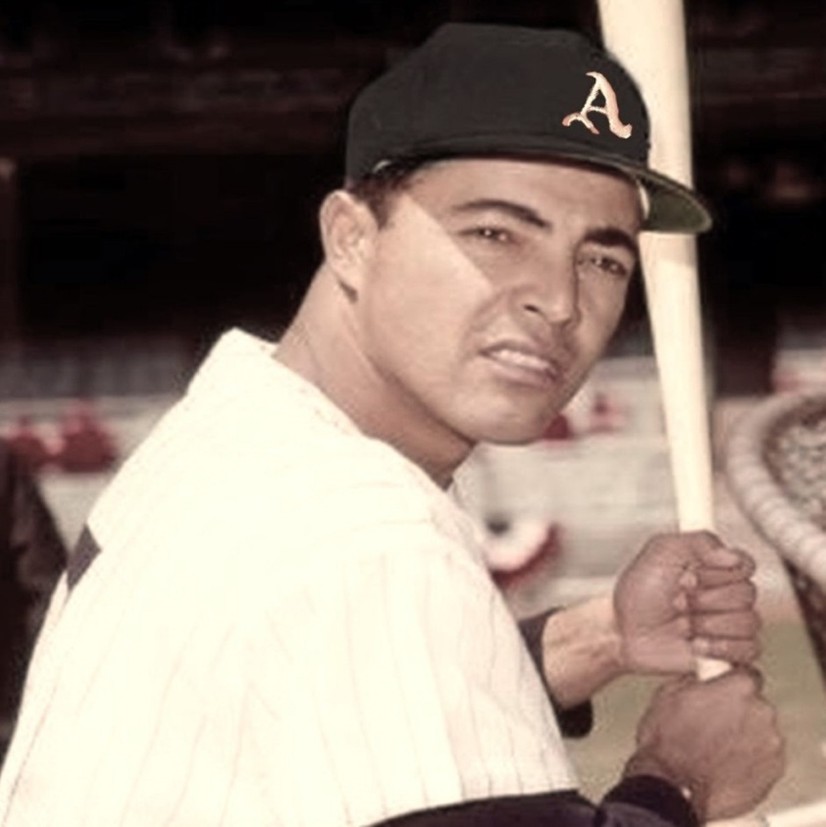
Arturo López, Arecibo Wolves, starred in the 1964 and 1965 IAS. Photo Credit: Arturo López.
Mayagüez Indios
Blackburn’s 1950 CS win helped him get the 1950-51 Mayagüez managing job. The first choice was Jackie Robinson, but Commissioner Happy Chandler used a technicality to deprive Mr. Robinson of this opportunity. Blackburn’s connections with the NY Yankees (NYY) allowed him to bring Lew Burdette (8-6 W-L) to last-place Mayagüez (24-51). Burdette impressed Boston Braves scouts, resulting in Boston acquiring Burdette and sending veteran Johnny Sain to the NYY late in the 1951 big-league season.
The Indios’ mid-1950s convenio with Brooklyn brought Tom Lasorda, Dixie Howell, Don Zimmer, and others to Mayagüez. Lasorda impressed fans on January 4, 1953, throwing two CG in one day. He won the opener, 3-1, and lost the nightcap, 2-1 in 10 innings. Pitching 19 innings in one afternoon and evening is nearly impossible to surpass. Lasorda remembered allowing a HR to Santurce’s Willie Mays early in the 1954-55 season. That winter, Howell posted a .335 BA, ranking fifth behind Mays (.395), Elston Howard (.369), Canena Márquez (.364), and Roberto Clemente (.344). Zimmer was released by Mayagüez, but quickly joined Santurce in late December 1954.
Wally Moon, a regular with the St. Louis Cardinals (SLC) in 1954 and 1955, joined the 1955-56 Mayagüez team. Ponce traded Moon to the Indios for pitcher Gary Blaylock. This was a rare case of imports being traded for each other. Moon led Mayagüez with a .297 BA. Ed Roebuck (from Brooklyn) and veteran Pete Wojey each recorded 10 wins for Mayagüez.
Mickey Owen led the 1956-57 Indios to a 41-31 mark, playoff wins, and a berth in the 1957 CS in Havana, Cuba. Native José “Ronquito” García copped MVP laurels with a .331 BA and 41 RBI, outpolling Roberto Clemente, league-leading .396 BA, with Caguas and Santurce. García liked Owen’s managing style and took pride in his MVP Award. Owen worked closely with 1957-58 Indios shortstop Maury Wills, encouraging him to switch-hit. Morning practices included Wills working on switch-hitting. He led the loop with 25 steals.
By 1958-59, the Detroit Tigers began sending prospects to Mayagüez. Pete Burnside, Bob Bruce, and Jerry Davie were three Tigers hurlers who reinforced the 1958-59 Indios. Bruce’s 2.46 ERA was fifth-best while Burnside won nine and fanned 98, third behind Bruce’s 103 and Juan “Terín” Pizarro’s 139. In 1959-60, Bruce won nine and led the league with a 1.98 ERA. Burnside’s 104 SO were third-best after Pizarro’s 141 and Earl Wilson’s 109.
Phil Regan pitched for the 1960-61 Mayagüez team, with a league-high 11 wins. Charley Lau was his catcher. “That winter was helpful for my big-league career,” noted Regan. “I became a better pitcher after that winter season.”
Detroit-Mayagüez Convenio Has Brief Baltimore Detour
Mayagüez’s agreement with Detroit continued in the 1960s and 1970s, with a few breaks. The 1962-63 and 1963-64 teams featured Baltimore prospect Boog Powell at first base (.294 BA, 15 HR, 66 RBI in two seasons). Lefty Dave McNally joined the 1963-64 Indios with a 5-5 record and a team-best 2.63 ERA. Cal Ermer managed Mayagüez both seasons, leading them to the 1962-63 title (42-28) and a spot in the February 1963 Interamerican Series in Panamá. “I have many good memories from winter ball, but the one I’ll never forget happened in Panamá,” said Ermer. “Panamá thought they had won. They danced conga lines by right field and set off fireworks from their dugout.”
In Mayagüez’s last game of the series, they beat host Chiriquí Bocas, forcing them into a tie-breaker with Nicaragua’s Boer Indians. “Someone lit a cigarette and started the fireworks,” Ermer said. “Firecrackers shot towards the infield, and Pachy Irizarry got burned on the ear. The whole park was filled with smoke, and I worried about telling Lee MacPhail about Boog Powell’s safety. The fireworks must have energized Boog because he hit two big home runs.”
Mayagüez Helps Detroit Win 1968 Fall Classic
From 1964-65 to 1967-68, Mayagüez had many Tigers players, including Dennis McLain (12-4, PRWL-best 126 strikeouts, and 2.08 ERA), 1965-66 batting champion Jim Northrup (.353), Mickey Stanley, Ray Oyler, John Hiller, Willie Horton (.306, 10 HR in 1964-65), and Joe Sparma. Detroit GM Jim Campbell worked closely with Mayagüez official Babel Pérez. Northrup said, “When I joined Detroit in 1964 and 1965, I struggled. My first season with Mayagüez, I lost the batting title to Lou Johnson, but the next year I hit .353 and won.”
Northrup earned $1,330 a month as a 1965 Detroit rookie, but received $1,500 per month with 1964-65 Mayagüez and more the next year. Northrup thanked Pérez and Irizarry for letting him grow as a player and earn more money. His triple against Bob Gibson in Game 7 of the 1968 World Series helped Detroit win the title. Wayne Blackburn led Mayagüez to the 1965-66 crown, after the team had finished last 15 years earlier.
Dennis Kinney, Ron LeFlore, Jack Morris, and Lance Parrish Star for Mayagüez
Ron LeFlore starred for the 1975-76 and 1977-78 Indios, leading the 1977-78 loop with a .396 BA and 34 SB. He helped fourth-place Mayagüez win the postseason and 1978 Caribbean Series (CS) in Mazatlán, Mexico, under skipper Rene Lachemann, who suggested that Indios owner Luis Gómez sign Santurce’s Tom Bruno and Ponce’s Dennis Kinney as “fresh arms” for the CS. Kinney was submerged in Cleveland’s minor league system for eight years before he saved two games in the 1978 CS, so this was not a convenio.
“Rene Lachemann wrote a letter to [Cleveland manager] Jeff Torborg after I got to Tucson for [1978] spring training,” recalled Kinney. “I had been with Cleveland since 1970 without being on their 40-man roster…Lachemann’s letter got me a chance…made the big-league team for the first time.”
Tom Bruno was thankful and appreciative for the chance to help win the CS, since his 9-3 win over Culiacán clinched the CS title on February 8. “We [Santurce] came in fifth, and Lachemann alerted me that Mayagüez needed a starter if they got to the CS,” said Bruno. “I would have been a 15-to-20 game winner in the majors if I had thrown the same way there as in the PRWL and 1978 CS.”
As the 1970s ended, Mayagüez brought more young Detroit prospects to PR. Jack Morris (7-3 W-L, 102 IP) and Lance Parrish (.245 BA, 10 HR, 35 RBI) were two more. Morris’ 58 SO led the league. Parrish had one year (1978) under his belt with Detroit when he formed one of PR’s best batteries with Morris. Parrish: “To be able to play with Jack down there, it just furthered our growth as pitcher-catcher in the Detroit organization. I caught him a couple of seasons in the minors, and then had the opportunity to catch Jack in the PRWL, and then worked with him in the majors. It was another step in our progression as major leaguers.”
Pat Kelly and Tom Gamboa Succeed at Mayagüez
Formal working agreements were in place when 36-year-old Pat Kelly led 1991-92 Mayagüez to its second CS crown. Kelly—who managed in the Montreal Expos organization—oversaw Wilfredo Cordero, a top Expos prospect, win the 1991-92 PRWL Rookie of the Year laurels. He inherited a blue-collar team.” Down there, you really need some combination of players who are hungry,” said Kelly. “We had a lot of AAA free agents like Chad Kreuter, Van Snider, and Bob Buchanan who were looking for jobs and got into the mode of playing hard every night. Wil Cordero was on the verge of making it, and still hungry. Playing hard and team chemistry won it for us.”
Four years later, Tom Gamboa with the Chicago Cubs organization brought Cubs prospect Doug Glanville to Mayagüez with other young “Cubbies.” Glanville bonded with Gamboa during three weeks of Instructional League baseball before playing for the Indios. Glanville was supposed to reinforce Culiacán Tomato Growers in the Mexican Pacific (Winter) League. However, Gamboa sent CF Darrell Sherman to Culiacán after choosing to send Glanville to Puerto Rico, a smart move—Glanville was named 1995-96 PRWL MVP after stealing a league-high (tie) 16 bases, batting .325 (fifth-best), and scoring 33 runs for the 28-21 Indios. Talented Indios natives Tony Valentín and Alex Díaz possessed “baseball smarts,” a plus for Gamboa and beneficial to Glanville’s style of play.
Ponce Convenios (1950s)
The Lions roared in the 1940s, winning five PRWL titles under George Scales. In 1950-51, they set up a convenio with the NY Yankees, resulting in Rogers Hornsby managing the 1950 Beaumont Roughnecks, a Yankees farm team, to the Texas League pennant over the Ft. Worth Cats. First baseman Bill Skowron (.302, 3 HR, 29 RBI) and catcher Clint Courtney (.238, 2 HR, 43 RBI) were two Yankee prospects under Hornsby’s wing. Ponce (43-35) finished third of six before losing the semis, four games to one, versus Santurce, sans Hornsby, who departed with one week left in the season to attend to his Hot Springs, Arkansas Baseball School. Ponce coach Benny Huffman took over. “I knew Hornsby from the [1937] St. Louis Browns,” noted Huffman. “At Ponce, we rode our bicycles from the Torres Apartments to Montaner Stadium.” Hornsby earned $10,000 for his three months with Ponce—the highest salary, then, for any Winter League skipper. Huffman was retained for 1951-52.
Other 1950s convenios included: 1951-52—Chicago White Sox (CWS), as ex-Negro Leaguer Bob Boyd emerged as PRWL batting champ (.374) before debuting with the 1952 CWS; 1953-54 Philadelphia Phillies, with catcher Stan Lopata plus starters Steve Ridzik (9-11, 2.88 ERA) and Jack Sanford (8-8, 1.99 ERA) pitching for colorful Lions skipper Joe Buzas. Ponce floundered, 1954-59, finishing last, except for 1957-58 (fourth of five). In 1959-60, the 17-45 Lions inked an agreement with Pittsburgh that lasted through 1962-63. Virgin Islanders Elmo Plaskett and Al McBean were “young” 1959-60 Lions, whereas two “old” Lions were Tom Lasorda (1-0, 2.16 ERA) and Bob Thurman (.262 BA, 3 HR, 11 RBI).
Ponce Convenios (1960-66)
Cal Ermer was confident heading into the 1960-61 season. Elmo Plaskett won the Triple Crown: .328, 15-45, but young lefty Bob Veale (2-6, 4.10 ERA) walked 63 in 72 innings. Al Jackson was 1-3, 3.19 ERA, in a partial season. A major letdown was the departure of Pirates prospects Tom Cheney (3-3, 3.39 ERA) and Joe Gibson (2-0, 0.56 ERA) early. Both pitched for the 1960 World Champion Pirates and were counted upon to bolster Ponce (29-35), who tied Santurce for fourth (last) place. Gibbon was homesick and returned to Mississippi. Donn Clendenon (.258, 7-26) and R.C. Stevens (.236, 6-26) provided some pop.
Things worsened, 1961-63; Ponce finished 28-52 and 26-44. The few 1962-63 bright spots were Plaskett (.321, 9-59), Clendenon (.313, 11-44), Don Leppert (.331, 8-21), Veale (7-6, 3.80, league-leading 104 SO). Dan Bankhead pitched well, as did Gary Peters. Cleveland sent Johnny Lipon to manage the 1963-64 Lions, resulting in Tommie Agee, Bob Chance, Tommy John, Sonny Siebert, and Gordon Seyfried reinforcing them, followed by Luis Tiant, Steve Hargan, Floyd Weaver, and Duke Sims in 1964-65. (Agee and Siebert returned in 1964-65.) Tommy John (2-1, 0.75 ERA) left early (1963-64), but the other starters mostly stayed.
Seyfried was living in Ponce’s Darlington Apartments when President John F. Kennedy (JFK) was assassinated in Dallas, November 22, 1963. He remembered the Island shutting down for several days and the people taking JFK’s death very hard. Seyfried also noted that Cleveland was determining whether he, or Ponce teammate Sonny Siebert, should join their [Cleveland’s] starting rotation in the mid-1960s, with Sam McDowell, Luis Tiant, and Steve Hargan. Seyfried went 9-6 in 112.1 innings with a 2.88 ERA versus Siebert, 7-3, 96.2 innings, and 2.98 ERA. Siebert threw harder with 70 SO to 34 BB compared to Seyfried’s 57 SO and 22 BB. Cleveland opted for Siebert and limited Seyfried to five games between September 1963 and April 1964, during which he was 0-1 with a 0.93 ERA.
The 1965-66 hiring of Luis “Tite” Arroyo enabled him to recruit Cardinals and Yankees prospects. SJ traded Virgin Islander Horace Clarke to Ponce earlier in the decade. Roger Repoz reinforced Ponce, 1965-68, and provided power plus a good attitude. He lived in Ponce’s Darlington Apartments, as did teammate Steve Carlton, destined for Cooperstown. In August 1965, Tite traveled to St. Louis to sign imports. He convinced the SLC to send Carlton to Ponce. “Carlton frequently told me how much the PRWL meant to him,” recalled Arroyo. “He didn’t even know how to get ready on the mound with men on base. All the runners on first got to second easily. He didn’t pivot properly. We worked on that.”
On January 20, 1966, Carlton, in relief, won Game 2 (semis), 3-2, over Caguas starter Ferguson Jenkins. Carlton (2-0) defeated Caguas, 7-1, in Game 5, pitching seven strong innings, as Grant Jackson took the loss. On January 28, Carlton blanked Mayagüez, 1-0, in Game 3 of the finals before losing Game 6, 3-2, to the Indios.
Thanks to Tite Arroyo, Wayne Blackburn, Tom Bruno, Lew Burdette, Cal Ermer, Tom Gamboa, Ronquito García, Benny Huffman, Spook Jacobs, Pat Kelly, Dennis Kinney, Arturo López, Eddie Napoleon, Mickey Owen, Lance Parrish, Phil Regan, and Gordon Seyfried. Jorge Colón Delgado did the editing and photo placements.

Un magnifico trabajo, muy instrustivo
Gracias.
Pingback: R.I.P. Phil Regan | The Baseball Sociologist